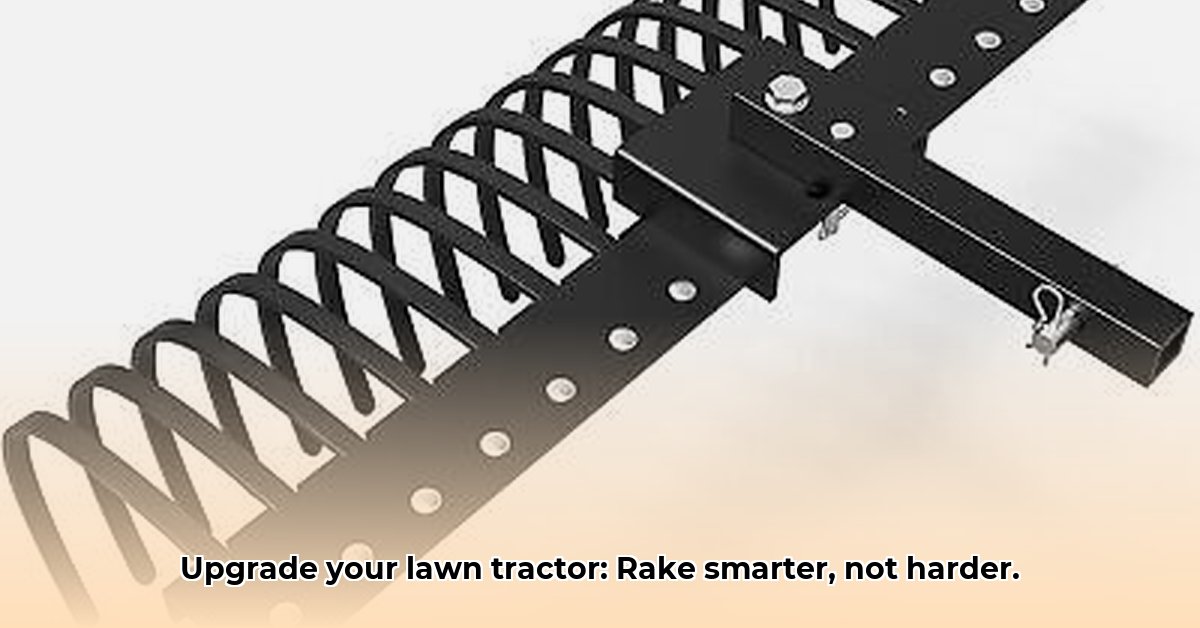
Rake for Lawn Tractor: Choosing the Right Tool for a Healthy Farm
Selecting the appropriate landscape rake for your lawn tractor is crucial for sustainable agriculture. It's not just about clearing debris; it's about preserving soil health and maximizing long-term productivity. This guide will help you choose and effectively utilize a rake to enhance your farming practices. For information on maintaining your equipment, check out tractor seat replacement.
Matching Your Rake to Your Farm: Size and Scale
Farm size significantly impacts rake selection. Large farms benefit from efficient, wide rakes like the Field Tuff 48-inch model, covering extensive areas quickly. Smaller operations might find a more maneuverable rake, such as the CountyLine 6-foot model, better suited to their needs and minimizes the risk of soil compaction in smaller spaces. Choosing the right size prevents unnecessary soil disturbance and improves efficiency.
Soil Type: Working Harmoniously with Nature
Soil type dictates raking techniques and rake selection. Clay soils, prone to compaction, require lighter, narrower rakes to prevent damage. Sandy soils, being more forgiving, allow for more aggressive raking. Regular soil testing helps determine your soil's composition and informs your decision. Ignoring soil type may lead to compaction and reduced water infiltration.
Protecting Your Crops: Gentle Raking for Bountiful Harvests
Crop type influences rake selection and technique. Shallow-rooted plants necessitate gentle raking with smaller rakes to avoid root damage. Deep-rooted crops are typically more resilient. Understanding your crops' root systems ensures efficient harvesting without damaging plants. Improper raking can reduce yields significantly.
Making the Right Choice: Key Decision-Making Factors
Before purchasing, consider these key factors:
- Farm Size: Larger farms demand efficient, wide rakes; smaller farms prioritize maneuverability and soil preservation.
- Soil Type: Clay soils require gentle raking to prevent compaction; sandy soils offer more flexibility.
- Crop Type: Protect shallow-rooted crops with gentler raking techniques.
- Budget: Consider initial cost, maintenance, and the rake's lifespan. A higher initial investment in a durable rake can reduce long-term costs.
Rake Comparison: Field Tuff vs. CountyLine
| Feature | Field Tuff 48-inch | CountyLine 6-foot |
|---|---|---|
| Size | Larger, wider | Smaller, more maneuverable |
| Efficiency | High, ideal for large areas | Lower, suitable for smaller fields and detail work |
| Soil Compaction | Higher potential | Lower potential |
| Maneuverability | Lower | Higher |
| Cost | Generally higher | Generally lower |
Raking Techniques: The Art of Gentle Action
Efficient raking minimizes soil disturbance. Consider these best practices:
- Gentle Passes: Multiple light passes are preferable to one heavy pass, especially on clay soils.
- Angle Adjustment: Experiment with the rake's angle to optimize debris clearing while minimizing soil disturbance.
- Soil Adaptation: Adjust techniques based on soil type (clay, sandy, etc.).
- Observation: Regularly monitor soil for compaction or erosion and adjust your approach.
Long-Term Sustainability and Soil Health: A Holistic Approach
Sustainable agriculture prioritizes soil health. Poor raking practices can lead to erosion, reduced water infiltration, and harm to the soil ecosystem. Choosing the right rake and mastering proper techniques are essential for long-term soil health and farm productivity. Ignoring these factors can lead to decreased crop yield and long-term farm problems.
Integrating Raking into a Sustainable System
Raking is a component of a broader sustainable farming strategy. These practices complement each other:
- No-Till Farming: Reduces soil compaction.
- Cover Cropping: Improves soil structure and health.
- Crop Rotation: Enhances soil fertility.
By combining proper raking with these practices, you create a holistic system that maximizes sustainable agricultural outputs.
Action Plan: A Step-by-Step Guide to Sustainable Raking
- Assess: Evaluate your farm's specific needs: size, soil type, crops.
- Choose: Select a rake that balances efficiency and soil health.
- Practice: Refine your raking technique to minimize soil disturbance.
- Monitor: Regularly inspect the soil for compaction or erosion.
- Adapt: Continuously improve your methods based on your observations.
Choosing the right rake and employing sustainable raking practices is vital for long-term farm health and profitability. Remember, healthy soil equals healthy crops and a sustainable future.